As Somalia president Hassan Sheikh Mohmoud marked his second year in office on May 15, Hilaal Institute issued a new report that analysed the political, economic, and security sectors from May 2022 to May 2024.
The report digs into President Mohamud’s tenure with a particular focus on the trends in Al-Shabab attacks and the effectiveness of allied operations, where the government has a mixture of successes and failures.
President Mohmoud would want to take credit for Somalia finally joining the East African Community (EAC) in March 2024 under his watch, and having launched the application in 2012 during his first term. However, he shares the credit with the Mohamed Abdullahi “Farmajo” administration that also pushed for EAC membership between 2017 and 2022.
On the political front, the report says that one of the most significant political failures of President Mohamud’s tenure has been his mishandling of the constitutional amendment process.
The President’s attempt to push through controversial amendments without adequate consultation or consensus-building with opposition groups and regional stakeholders has deepened political divisions within the country and undermined the legitimacy of the process.
The proposed amendments, which aim to strengthen the central government’s power at the expense of the federal member states, have been met with strong resistance, particularly from Puntland, a semi-autonomous region in northeastern Somalia. Puntland has rejected the amendments, arguing that they undermine the country’s federal structure and the rights of regional states.
The President’s failure to engage in genuine dialogue and build consensus around the constitutional reform process has not only strained relations with key regional actors but has also diverted attention and resources away from pressing security and economic challenges facing the country.
Another significant political failure of President Hassan Sheikh Mohamud’s administration has been the deterioration of Somalia’s relationships with key regional allies, particularly Ethiopia and the United Arab Emirates (UAE).
The diplomatic fallout with Ethiopia, following the signing of a controversial Memorandum of Understanding (MoU) between Ethiopia and Somaliland, has had far-reaching consequences for regional security cooperation.
Similarly, the President’s mishandling of relations with the UAE has led to a significant reduction in financial and military support for Somalia.
The UAE’s decision to halt funding for the Somali National Army (SNA) and withdraw its support for counter-insurgency efforts has had a detrimental impact on Somalia’s ability to effectively combat Al-Shabab and maintain security.
On the economic front, the President has made little progress in implementing much-needed reforms to stimulate growth, create jobs, and attract foreign investment.
The report says that the lack of a clear economic vision and the persistence of corruption and weak governance have hindered efforts to promote sustainable development and improve the lives of ordinary Somalis.
But in December 2023, after ten years of negotiations, Somalia was able to obtain a $4.5 billion debt write-off from international lenders, which represented a significant political victory for President Hassan Sheikh Mohamud.
The move by multilateral and bilateral lenders, including the World Bank and International Monetary Fund (IMF), significantly reduces the country’s debt to $600 million from a high of $5.2bn, according to the World Bank. Somalia’s external debt now drops below 6 percent of GDP, from 64 percent in 2018.
The write-off will be split between the World Bank’s International Development Association and the IMF ($448.5 million and $343.2 million, respectively) and the African Development Fund ($131 million). Of the total write-off, $3 billion will come from commercial creditors.
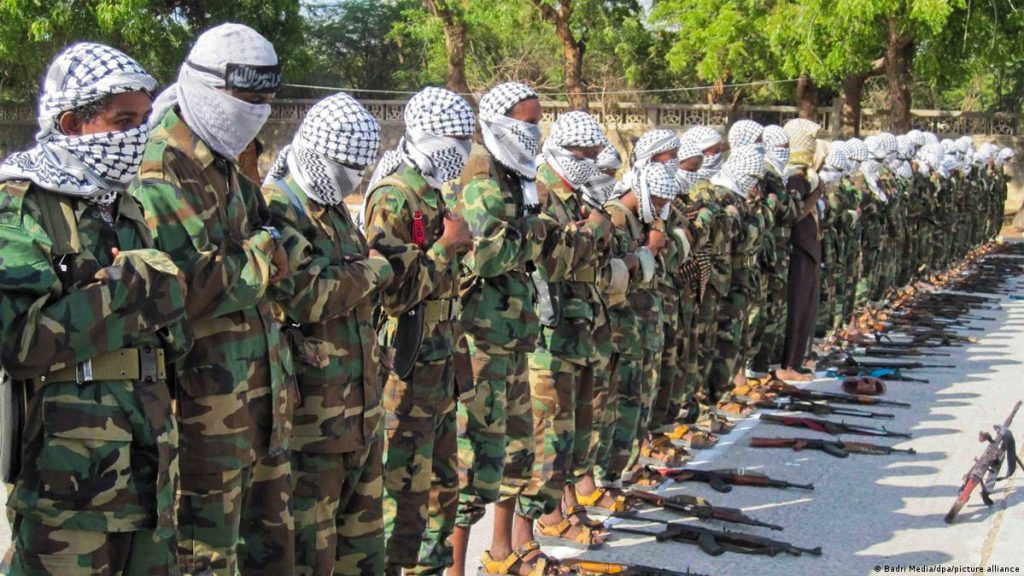
But most crucial is the security front where President Mahmoud’s administration faced numerous challenges. The nearly two-year offensive against Al-Shabab has yielded limited results, with the group continuing to maintain a strong presence in many parts of the country and carry out frequent attacks.
The President’s decision to arm clan militias in the fight against Al-Shabab has had the unintended consequence of exacerbating clan rivalries and fueling further conflict, undermining efforts to establish a cohesive and effective security apparatus.
The analysis of security trends in Somalia during President Mohamud’s tenure from May 2022 to May 2024 reveals a significant escalation in Al-Shabab’s offensive operations.
The data indicates that the group has not only increased the frequency of its attacks but has also strategically shifted towards more aggressive and high-impact tactics, such as direct raids and the extensive use of improvised explosive devices (IEDs).
“This shift underscores Al-Shabab’s growing confidence and operational capacity, posing substantial challenges to the Somali government’s efforts to restore stability,” the report says.
While allied operations, including airstrikes and special forces raids, have increased during this period, their effectiveness in degrading Al-Shabab’s capabilities and reducing its territorial control remains questionable.
The militant group’s ability to adapt to these counter-insurgency measures and maintain its operational cohesion highlights the need for a more comprehensive and adaptive approach to security.
Internal security issues, such as increased infighting among security forces and rising incidents of security forces targeting civilians, have further complicated the security landscape.
The government’s policy of arming clan militias to counter Al-Shabab has inadvertently exacerbated clan rivalries and fueled additional conflict, undermining efforts to establish a cohesive and effective security apparatus.
These issues, combined with widespread corruption and mismanagement within the security forces, have eroded public trust and hindered the effectiveness of counter-insurgency efforts.
According to another report by the East Africa Center for Research and Strategic Studies (EACRSS), the government did its best to achieve the security pillar though they are facing a strong enemy. The EACRSS gives the government 30 percent in this pillar.
While the government liberated most of the Hiiraan region and parts of Galmudug, most stronghold areas such as Jubbaland and Southwest are still under Al Shabaab. The second phase of the operation which was called the “Operation Black Lion” has failed.
It was to involve collaboration between the Federal Government of Somalia (FGS); clan militias known as the Macawiisley; the leaders of Somalia’s five federal member states as well as neighbouring countries Ethiopia, Kenya, and Djibouti
However, the FGS has not generated sufficient federal security forces to carry out the Black Lion offensive without significant support from either local militias or the militaries from the neighbouring countries—that were to contribute between 20,000-30,000 troops.
During the period from 2020 to 2021, the frequency of Al-Shabab attacks across various categories remained relatively stable or exhibited a slight decline. However, this trend reversed dramatically during the 2022-2023 period.
Notably, the number of raids conducted by Al-Shabab surged by 75 percent from an average of 280 per year in 2020-2021 to 490 per year in 2022-2023. This sharp rise indicates a strategic shift towards more aggressive confrontations, underscoring the group’s enhanced operational capacity.
Similarly, the use of improvised explosive devices (IEDs) saw a substantial increase, with incidents rising by 50 percent from an average of 166.5 per year in 2020-2021 to 249.5 per year in 2022- 2023.
This surge highlights Al-Shabab’s continued reliance on asymmetric warfare tactics designed to inflict maximum damage while minimising its casualties.
Other categories of attacks, such as ambushes, grenade attacks, and Vehicle-Borne Improvised Explosive Devices (VBIEDs), also saw increases, albeit more modest compared to raids and IEDs.
Airstrikes conducted by the United States have seen a moderate increase, rising from 43 in 2020 to 48 in 2023. However, this uptick in aerial support has not translated into a significant reduction in Al-Shabab’s operational capacity or territorial control.
Raids conducted by the Somali National Army (SNA) special forces have also witnessed a notable increase, growing from 48 in 2020 to 85 in 2023. This 77 percent surge in special forces operations indicates a greater emphasis on targeted strikes against Al-Shabab leadership and high-value targets.
However, the effectiveness of these raids in disrupting the group’s command and control structure remains uncertain, as Al-Shabab has demonstrated a remarkable ability to regenerate its leadership and maintain its operational cohesion. In contrast, raids conducted by the SNA regular forces have shown a slight decrease, dropping from 30 in 2020 to 27 in 2023.