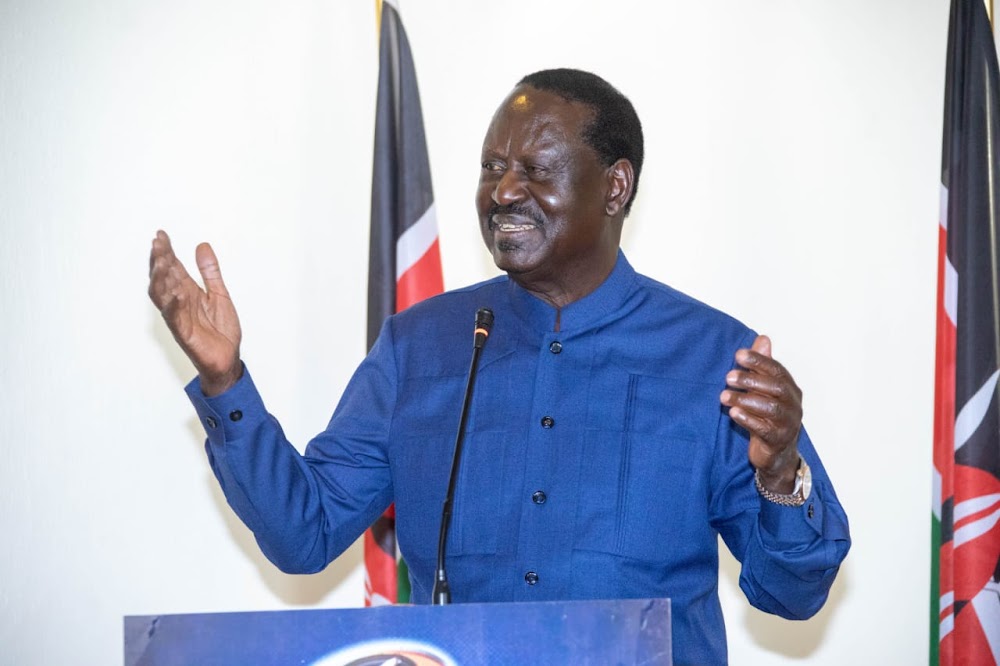
The doyen of Kenya’s opposition politics and an aspirant for the African Union Commission (AUC) chairmanship, Raila Odinga, recently hit the government hard, sparking a backlash that is sure to hang around for some time.
Speaking at a Nairobi slum where the government was demolishing structures close to a river following a devastating flood, Raila took a swipe at President William Ruto, describing him as clueless on matters leadership. He called on the head of state to revert his directive to the Interior ministry to oversee the demolitions in the riparian lands of the Mukuru kwa Ruben informal settlement. Raila urged the government to build houses for the residents before making any move to demolish their houses.
The president’s more hawkish supporters, and they are a legion, immediately latched on, warning the leader of the Azimio One Kenya opposition coalition, to shut up since the government was backing his bid for the continental seat. To Senate Majority Leader Aaron Cheruiyot, Raila needs prayers as he was abusing his chief campaigner, Ruto. Referring to him by one of his several political monikers, Tinga, Cheruiyot admonished Raila that his constituency was now African presidents, who hold the key to his next election.
“He is out here insulting a man (Ruto) they all hold in such high regard. On election day, when they evaluate his credentials, how do you imagine it will end?’’ Cheruiyot added for a good measure.
National Assembly Majority Leader Kimani Ichung’wah weighed in, advising Raila to humble himself and respect his AUC chief campaigner. Ichung’wah described Ruto as the master of local and international politics, who defeated Raila in the presidential race, despite the latter being backed by the previous state machinery.
To the government wing, like many believe, campaigning for Raila for the AUC seat is a tradeoff he must pay for with his silence on the domestic front. Yet to millions others, Raila’s silence, amidst the many government failures, is tantamount to a betrayal, literally abandoning the downtrodden midstream.
Thus, which way Raila?
Unbothered, would be a probable response. Amid the raucous, Raila has proceeded to pronounce his radical plan for Africa, should he bag the seat. His priority list includes enhancing the AU’s financial independence, peace and security and global partnerships. Raila also envisions accelerating the ongoing institutional reforms at the AU, within defined timelines and rationalised budget.
Nairobi’s expectations of the Raila AUC bid more or less mirror those of Ethiopia of the Director General of the World Health Organisation (WHO) Tedros Adhanom Ghebreyesus. Addis would rather knock Tedros off the global pedestal if he cannot toe its line. It will be recalled, for instance, that in September 2022, after Tedros won approval for a second five-year term, the Permanent Mission of Ethiopia in Geneva submitted a complaint to the WHO asking it to conduct an unrelated investigation of the health agency boss, accusing him of using his position to undermine the government of Ethiopia.
But in an interview with Bloomberg, Tedros, termed the probe part of a “smear campaign” based on his ethnicity and membership in the Tigray People’s Liberation Front (TPLF), which was itself accused of detaining and torturing opponents while in power. Tedros said that his family in Ethiopia was harassed and that he had to install security cameras at his Geneva home after identifying what he said were plainclothes agents from Ethiopia.
Government support or none, Raila still enjoys his democratic rights as enshrined in the constitution, wrote David Kigo in a commentary in the Daily Nation, Kenya’s leading newspaper. Kigo asserted that since Kenya reintroduced multi-partism in the 1990s, it did away with the hypocrisy on one-party rule that defined the post-independent Kanu regime where a dissent voice was a direct ticket to political oblivion.
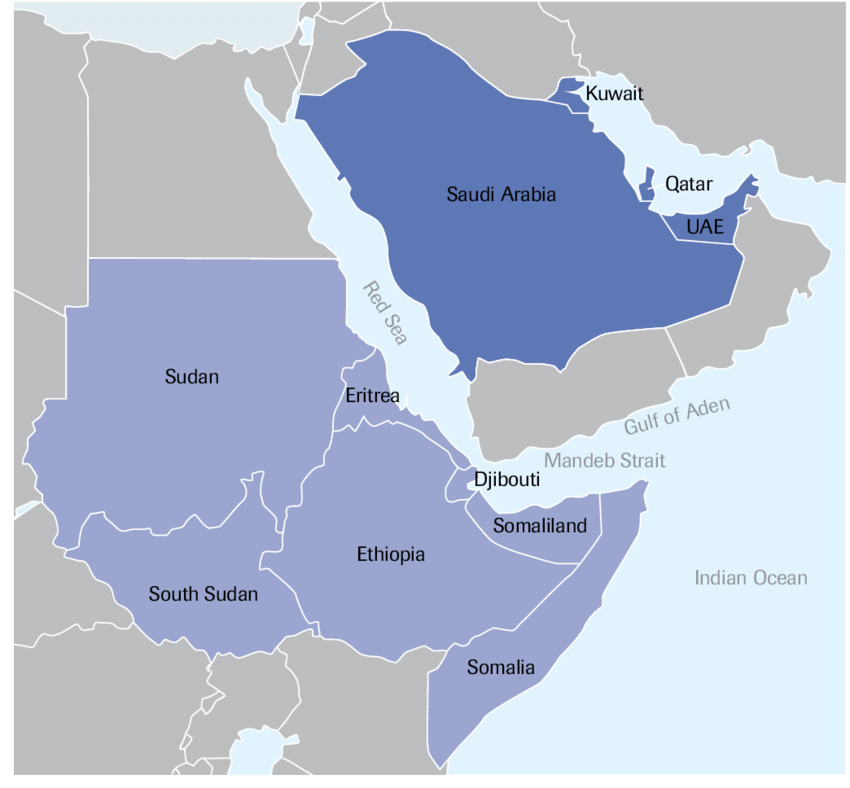
Intense lobbying for the AUC seat is ongoing, but the campaign to replace the incumbent Moussa Faki Mahamat is set to officially begin once all interested aspirants submit their applications this month (May). Under the rotational rules drawn in 2018, the next AUC chairperson should come from eastern Africa. However, the election rules have no limit on the number of candidates from any region, hence the intense competition from eastern Africa.
In what could bring a direct challenge to the Kenyan, Djibouti has officially confirmed it was fronting its Foreign minister Mahmoud Ali Youssouf as a candidate, becoming the third person to show interest in the continental top post. Somalia has been lobbying for its ex-Foreign Affairs minister Fawzia Yusuf Adam to take up the job, to follow in the footsteps of South African Nkosazana Clarice Dlamini-Zuma, the first woman to hold the post. Since January, there had been speculation that Ms Adam, the first female Foreign Minister in Somalia and who served under the first term of President Hassan Sheikh Mohamud, would enter the race. But it was only recently that her government began lobbying for votes. Adam told Kenya’s Daily Nation she was competing with the full blessings of her home government and wants to “amplify African voices and advance African agenda”.
As it were, one would say, Raila could be in a real catch 22 situation; damned if he speaks out, damned if he shuts up. But then again, it is Raila, the enigma, in the words of Nigerian biographer Babafemi Badejo. One can never predict with precision the next rabbit he could unleash from his bag.