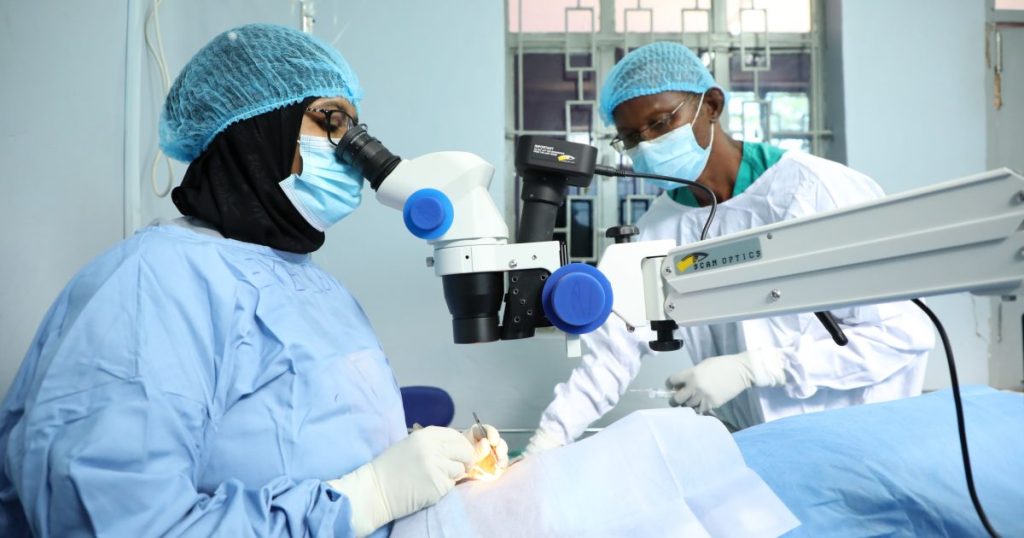
The high and mighty of eastern Africa often seek medical treatment in Kenya, creating the impression of an ideal healthcare system in the country. Unbeknown to many, such services are only available in the private medical facilities that are out of reach of the majority Kenyans, including those in gainful employment. For the latter, medical care can only be accessed in the public institutions, which even at their best, are decrepit, understaffed, overcrowded and riddled with corruption.
And now, Kenya’s doctors are on strike over the government’s failure to implement a raft of promises from a collective bargaining agreement signed in 2017. The nearly two-decade deal too was the culmination of a 100-day strike that saw many die from lack of medical care. In addition, the Kenya Medical Practitioners, Pharmacists and Dentists Union (KMPDU) is demanding a comprehensive medical cover for its members, and the posting of some 1,200 medical interns. Furthermore, the doctors, both in the public hospitals and in private practice, are disenchanted by the government’s imposition of the mandatory Electronic Tax Invoice Management System (eTIMS) in their financial transactions. President William Ruto’s government’s desire to rev up revenue collection from the citizens, has introduced a raft of unpopular measures, among them the eTIMS.
When all is said and done, the strike is all about money, which the government reckons it does not have. Indeed, Health Cabinet Secretary Susan Nakhumicha says the government is determined to fix human resource concerns raised by the medical fraternity permanently, but lacks the requisite financial resources. Nakhumicha accuses cartels in government of sponsoring the doctors’ strike, and urges the medics to consider patients’ plight and suspend the strike as ordered by court.
But is the Kenya government genuinely short of funds or was simply having its priorities wrong? According to reports by the Auditor General, Nancy Gathungu, and the Controller of Budget, Margaret Nyakang’o, the Kenya Kwanza coalition government is simply living large. It is a government of massive wastage, fueled by a frenzy of luxury travels, fuel guzzlers, and unused idle billions. For financial year 22/23, for instance, the office of Deputy President Rigathi Gachagua, spent a whooping KSh10 million ($72,000) and KSh7.8 million ($56,000) to buy curtains and furniture respectively. The offices of President Ruto, his deputy and Prime Cabinet Secretary Musalia Mudavadi were allocated KSh802.2 million ($5.8m) to buy motor vehicles. The government is also bloated with individuals, whose only qualifications include ethnic affiliation to the top office bearers, political loyalty or being partners in deals, of invariably irregular nature, with the highest office holders. Majority of them have unclear job descriptions but who flaunt their privileges for all to see.
A document by the Ministry of Health and the Salaries Remuneration Commission (SRC) ranks a medical intern as the lowest cadre. The position holder is entitled to a stipend of between $196), and while the highest goes home with $503 per month.
The need for additional doctors in Kenya remains dire. The current ratio is 1:17000, far off the 1:1000 ratio recommended by the World Health Organisation (WHO). The situation has compromised the delivery of quality healthcare services, according to KPMDU Secretary General Davji Atella. Atella laments that Kenya seems to have adopted a policy of training doctors without absorbing them into service. But the government maintains the ‘can’t pay, won’t pay’ stance.
With clinical officers poised to join the strike, the situation for the masses can only get worse. Just who between the medical workers or the government will blink first, remains to be seen.