Africa bears a disproportionate burden of social, economic, and political challenges, creating an enduring narrative of strife. Military takeovers, civil wars, economic debt, and famine persist, portraying a continent in turmoil. The prevailing perception paints Africa as a region struggling for peace, marked by undemocratic governance, corruption, and a prevalence of coups d’état.
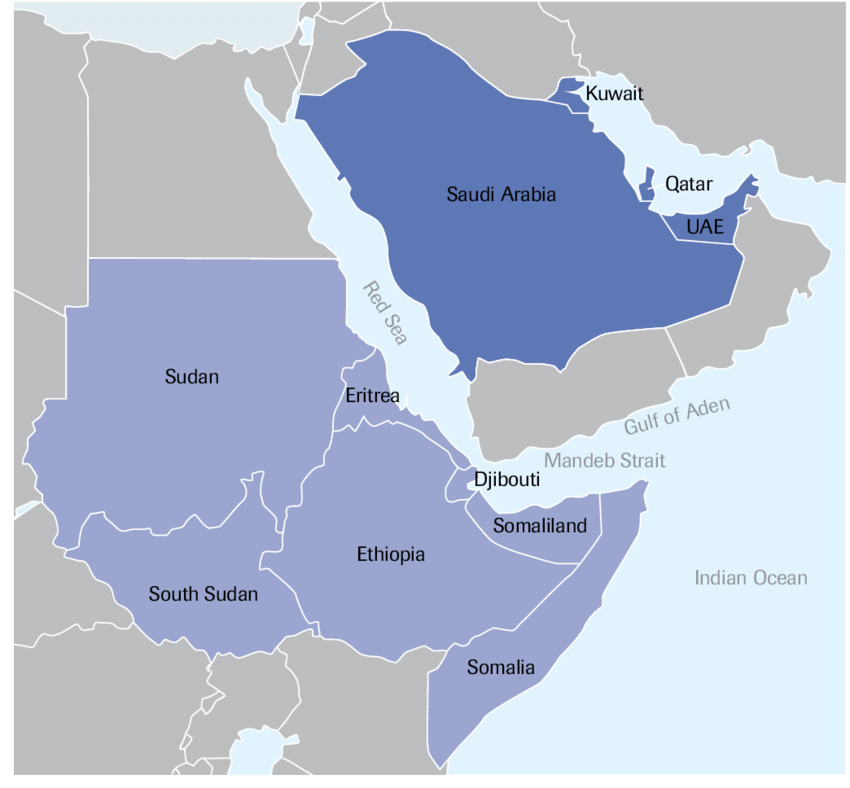
Within this complex landscape, the eastern and Horn of Africa countries stand out. Despite the widespread perception of military interventions as a norm in African governance, we explore why coups may not be as effective in these specific regions. Understanding the unique dynamics and factors that contribute to stability or unrest can shed light on the nuanced challenges faced by these countries.
By Ali Ibrahim.
There is a troubling surge in the overthrow of governments across the continent, notably in West Africa, Central Africa, and the Sahel region, witnessing nine successful coups since 2020.
Strikingly, these coups have garnered massive popular support, with jubilant street celebrations alongside military actions.
The sequence commenced in Mali, followed by Guinea and Chad, and took a significant turn with the toppling of Sudan’s civilian-military transitional government in October 2021. Burkina Faso experienced two coups in 2022, and in 2023, Niger and Gabon joined the list.
Furthermore, unsuccessful attempts occurred in Guinea-Bissau (February 1, 2022), Sao Tome and Principe (November 2022), and The Gambia (December 20, 2022). In September, Congo Brazzaville refuted claims of a coup attempt against President Denis Nguesso, who has held office for 39 years, during his attendance at the 78th session of the UN General Assembly in New York.
The prevailing situation raises concerns about the potential spread of the coup epidemic to the Eastern and Horn of Africa regions, which are already grappling with instability. Historically, these regions have faced political turbulence, marked by successful and attempted coups.

Past failed and successful coups
Successful Coups
In the tumultuous history of Eastern Africa, two notable coups stand out as defining moments that reshaped the political landscape of their respective nations.
In 1974, Ethiopia experienced a seismic shift in power as a military junta overthrew the monarchy, setting the stage for radical changes in the country’s governance and society. Seventeen years later, in 1991, Somalia witnessed the collapse of its long-standing government, plunging the nation into a prolonged period of chaos and instability. It is yet to recover to date.
Ethiopia, 1974
The Ethiopian coup of September 1974 led by Lt Col Mengistu Haile Mariam was a watershed moment in the nation’s history, marking the abrupt end of Emperor Haile Selassie’s monarchy.
This coup triggered a period of instability and the Ethiopian Civil War (1974-1991), with economic hardship and famine exacerbating the suffering, notably the 1983-1985 famine in Tigray.
In 1991, a coalition of rebel groups, including the Ethiopian People’s Revolutionary Democratic Front, ended the Derg’s rule, leaving behind a legacy of profound political, social, and economic challenges that continue to shape Ethiopia’s trajectory.
Somalia, 1991
The 1991 Somali coup was a seismic event in the nation’s history, precipitating the collapse of the central government and thrusting Somalia into a prolonged period of turmoil. After President Siad Barre’s authoritarian rule was overthrown, the stage was set for a dramatic shift in power. Barre’s over two-decade-long rule came to an end as he fled Mogadishu.
His departure created a power vacuum, resulting in a brutal, clan-based civil war that engulfed the nation. The coup’s legacy marked the onset of a prolonged state collapse and anarchy in Somalia, with no effective central government for over 30 years.
The rebuilding continues, amidst the terror threat by Al-Shabaab. The ensuing conflict, humanitarian catastrophes, including widespread famine, and massive population displacement have inflicted immeasurable suffering, cementing the 1991 Somali coup as a critical turning point in its history.
Unsuccessful Coups
While the Eastern Africa region has witnessed significant successful coups, it has also grappled with attempts that did not materialize. In 1971, Tanzania faced an internal threat as an attempt to overthrow then-President Julius Nyerere’s government unfolded. Notably, Kenya experienced a widely known coup attempt in 1982 against President Daniel Moi, who had succeeded founding President Jomo Kenyatta after his death in 1978.
Coups in Uganda
Uganda, within the Eastern Africa region, has unfortunately endured numerous coup attempts:
- ● February 1966: Milton Obote overthrows King Mutesa II of Buganda.
- ● January 25, 1971: Idi Amin overthrows Milton Obote.
- ● May 12, 1980: Paulo Muwanga overthrows Godfrey Binaisa.
- ● July 27, 1985: Tito Okello overthrows Milton Obote.
- ● January 26, 1986: Yoweri Museveni overthrows Tito Okello and has been president since then.Comparative analysisCoup attempts in Africa have had varying degrees of success, depending on the region and the political climate.Coups in the East African region have had lower chances of success compared to those in other parts of the continent, especially Western Africa. There hasn’t been a successful coup in the EAC region in the last 30 years, with the last such attempts being in Burundi in May 2015 led by Maj Gen Godefroid Niyombare.This can be attributed to various factors, including colonial history, stronger democratic institutions, ethnic and tribal divisions, regional cooperation, and international pressure.
• Ethnic and tribal divisions
Many countries in Eastern Africa are ethnically and tribally diverse, which can complicate coup
dynamics.
Military factions may be divided along ethnic or tribal lines, leading to factionalism within the armed forces that hinders coordinated coup attempts, as demonstrated in the two Kenyan cases. These divided loyalties make it significantly difficult for coup planners to gain unanimous support.
• Strong military presence
A robust military presence in Eastern and the Horn of Africa, characterized by loyalty to the ruling regime, advanced training, and equipment, continues to pose a formidable barrier to successful coup attempts.
This strong military presence and professionalism, especially in Kenya, ensures rapid response capabilities, centralized command structures, and established counter-coup measures that make it challenging for coup plotters to garner sufficient support within the armed forces or gain access to the necessary resources.
Furthermore, political patronage networks and international support often bolster military leaders’ allegiance to the government, reducing the likelihood of successful coup endeavours.
• Strong institutions
Strong democratic institutions particularly in Kenya and Tanzania serve as a formidable deterrent to
coup attempts by providing legitimate and peaceful channels for political change and dispute resolution.
These institutions enable the regular and non-violent transfer of power through elections, although the credibility of those elections has often been questioned. The presence of checks and balances, respect for the rule of law, civilian oversight of the military, and accountability mechanisms reduce the incentives for extra-constitutional actions like coups.
Additionally, the legitimacy derived from popular support and international recognition further dissuades leaders from pursuing undemocratic means to maintain power.
• Regional cooperation
Regional cooperation among Eastern African states under the East Africa Community and the Horn of Africa countries under IGAD can act as a significant impediment to coup attempts by fostering collective security mechanisms and diplomatic pressure. Unfortunately, this hasn’t worked in Sudan, largely due to complex domestic politics and military dynamics.
The African Union, the EAC and the Intergovernmental Authority on Development (IGAD) often have protocols in place to respond to political crises, including coups. Member states are encouraged to uphold democratic norms and principles, and the threat of regional sanctions and diplomatic isolation discourages coup plotters.
• International pressure
Kenya, Ethiopia, Uganda and to some extent Tanzania are key strategic countries in the region.
It thus occurs that international pressure serves as a formidable deterrent against coups in the region by imposing diplomatic, economic, and political consequences on coup leaders and their governments.
Diplomatic isolation, economic sanctions, and the loss of international partnerships and recognition can severely weaken the position of potential coup plotters, making it difficult for them to gain diplomatic recognition and resources.
Condemnation from regional organizations and global public opinion further isolates coup leaders, while international efforts such as peacekeeping and mediation aim to restore stability and democratic governance. The combined impact of these measures makes coup attempts less appealing and riskier in the face of strong international opposition.
Alternatives to Coups
• Election and democracy
Elections and democracy offer a peaceful alternative to coups in Eastern and the Horn of Africa.
By allowing power transitions through the will of the people, they confer legitimacy, encourage inclusive governance, uphold civil liberties, and provide mechanisms for conflict resolution.
International support for democratically elected governments also deters coup attempts, underlining the importance of strong democratic institutions and ongoing commitment to democratic governance.
• Civil society and activism
Civil society and activism deter coups in Eastern and the Horn of Africa by promoting democratic
values, monitoring government actions, and advocating peaceful change.
Through protests, advocacy, and conflict mediation, they reduce the appeal of violent political change. Independent media, often working with them, ensures transparency and prevents secrecy in coup plotting, contributing to regional stability.
• International diplomacy
International diplomacy serves as a crucial deterrent to coups by promoting peaceful conflict resolution, exerting diplomatic pressure, and emphasizing the legitimacy of governments established through democratic processes.
Diplomacy encourages dialogue, conflict mediation, and the application of diplomatic pressure, such as sanctions and condemnation, to discourage coup attempts.
International recognition of legitimate governments and the involvement of regional organizations further reinforce the message that coups are unacceptable and that political disputes should be resolved through peaceful means.
Conclusion
As history would have it, coups in Eastern and the Horn of Africa are less likely to succeed vis-a-vis other regions of the continent.
The aforementioned factors form formidable obstacles to coups, rendering them unlikely to succeed.
This, however, doesn’t rule out the occurrence of coups in its entirety, albeit the intricate dynamics of the region make them riskier and less attractive.
Recommendations
To maintain a low likelihood of coups in Eastern and the Horn of Africa, it’s essential to prioritize the development of strong democratic institutions, invest significantly in conflict resolution, and foster reconciliation.
Strengthening democratic governance, upholding the rule of law, and ensuring transparent electoral processes will help build resilience against political upheavals.
Concurrently, robust conflict resolution mechanisms, dialogue initiatives, and reconciliation efforts can address underlying grievances and divisions that often contribute to instability.
These measures, supported by regional and international partners, will play a vital role in promoting lasting peace and democratic stability in the region.
The author is a PhD Candidate, A Senior Consultant at HDC, and works on governance and peacebuilding support in the Horn of Africa.
Email: ali.i.dayow@gmail.com